From a Believer to a Buddhist
- Introduction
- Where we are now ?
- Are you still searching for the way?
- The Triple Gem: Buddha, Dharma & Sangha
- Taking the right step
- Taking the first step and its benefits
- Advancing into Buddhism
INTRODUCTION
Upon attaining Enlightenment under Bodhi Tree, the Buddha exclaimed: “Isn’t it wonderful, all beings are gifted with the potential to attain the wisdom of a Buddha. The reason why they have yet to gain enlightenment is due to their distractions and attachments”. All being are originally equipped with the Buddha Nature and the pureness and serenity. However, along the way, we get so clouded by distractions and attachments that we have to rediscover ourselves.
Just before the Buddha passed into Final Nirvana, he expounded to his disciples that they should only rely on themselves, the Dharma and nothing else.
If you observe around us, you will notice the pain, suffering and frustrations experienced by beings. Even after we have pursued and realized all our dreams and aspirations, we may still not be happy.
A person upon reaching his pinnacle will realize that life is lonely or incomplete even at the top. Health, wealth, influence and power are never sufficient for many. But whether you are traveling on land or navigating on the ocean, what you are searching for ultimately is still a sanctuary. A traveler in the night will need to rely on a lamp. A seafarer will need to rely on a compass, the young need a pair of guiding hands and the aged need the support of a walking aid, all of them are searching for their sanctuary and support.The Triple Gem is our only lamp and compass to reach our sanctuary.
Many people subscribe to the concept of kindness and compassion. They also try to abide by all rules and laws. But human beings are by nature not perfect and try as we might to be a good person, when in the face with temptations, if our will power is weak, we may stumble, thus hurting ourselves or even others unknowingly.
A person who makes offerings to the Buddha conscientiously yet do not Take Refuge in the Triple Gem (also known as Taking the Threefold Refuge) is merely an observer and has not taken his first step onto the path to enlightenment. He may still lose his way anytime.
When there are so many teachers around us, why do you still want to make the journey alone.
2. ARE YOU STILL SEARCHING FOR THE WAY?
There is no compulsion for a Buddhist to adhere to a strict vegetarian diet. Neither does being a strict vegetarian automatically makes one a Buddhist. When a person wishes to become a Buddhist, the first step is to go to the Buddha, Dharma and Sangha for refuge (Taking the Threefold Refuge). Since the time of Buddha, Taking the Threefold refuge identifies a person as a Buddhist.
In Singapore and a number of Asian countries, Mahayana monks keep to a strict vegetarian diet. But this requirement need not be imposed on all Buddhists. What is important is that it must come from within, whether one should keep to a strict vegetarian diet would depend on oneself.
Buddhism is democratic. One is given the freedom to exercise one’s choice and decide whether one wants to become a Buddhist so as to change and to have control over one’s path in life.
Those who have taken the Threefold Refuge in the Triple Gem can still practise ancestral worship. Honouring one’s ancestors is a way of expressing one’s filial piety and gratitude to them. Filial piety is strongly encouraged in Buddha’s teachings.
3. THE TRIPLE GEM : BUDDHA, DHARMA & SANGHA
In the scriptures, there are three interpretations for the Triple Gem.
| 1) The original Triple Gem | |
| Buddha Gem | The physical manifestation of Shakyamuni Buddha, including his 32 major and 80 minor physical marks. |
| Dharma Gem | The discourses which the Buddha preached upon attaining enlightenment on the Four Noble Truths, the Noble Eightfold Path, Karma, Rebirth, Dependent Origination, etc. |
| Sangha Gem | The Five Ascetics, Kaudinya & others who became the Buddha’s first disciples. |
| 2) The current Triple Gem | |
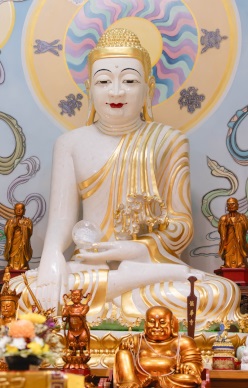
| Buddha Gem | Statues, images and pictures of the Buddha are classified as the Buddha Gem. |
| Dharma Gem | All Buddhist scriptures and books are regarded as the Dharma Gem. |
| Sangha Gem | All Bhikkus(monks) and Bhikkunis(nuns) who have taken the full vows and precepts are known as the Sangha. |
| 3) Our internal Triple Gem | |
| Buddha Gem | Within each of us, we have our Buddha-nature |
| Dharma Gem | Every one has equanimity, which is our Dharma-nature |
| Sangha Gem | The quest and desire for inner peace is our Sangha-nature. |
Human beings are ignorant, hence we need to be constantly guided. Although everyone has a compassionate heart in them, we need to rediscover ourselves and the Triple Gem within us. We aim to do good, although we may fail along the way, there is no need to be ashamed of our failure. So long as we are pious, true and determined to cultivate, we will finally succeed.
The correct path to take is to seek refuge in the Triple Gem and be a disciple of the Buddha, Dharma & Sangha.
Buddhist choose to take refuge in the Buddha is because the Buddha can guide our way. Out of compassion, the Buddha guide beings to liberate from their illness, sufferings and ignorance.
The Dharma is all the truth and teachings expounded by the Buddha. Buddhist seek refuge in the Dharma because it will guide us towards a clear path with directional signs along the way, stairs to move forward uphill and bridge to cross streams and obstacles.
Buddhist take refuge in the Dharma as the Dharma will lead us away from ignorance, cravings and evil thoughts, teaching us the way to liberate from Samsara and rebirth.
The Sangha refers to the Monks and Nuns who have taken up the robes and vows in the Buddhist community. The male are known as Bhikkus & female known as Bhikkunis.
Buddhist take refuge in the Sangha because the Sangha can guide us along the right path giving us the guidance, advice, encouragement, care & concern. The are our partner along the way to enlightenment.
5. TAKING THE FIRST STEP AND ITS BENEFITS
1. Taking the Threefold Refuge in the Triple Gem
The first step to become a Buddhist is to Take the Threefold Refuge in the Triple Gem.
Taking the Threefold Refuge in the Triple Gem is like gaining a lamp to show the way in the darkest night, a rescue ship amongst the sea of sorrows, a shower of rain on a fire.
A Buddhist performs the act of taking the Threefold Refuge as the first step on the path to Enlightenment. Thereafter, through good conduct and mental development, one tries to achieve contentment, self-control, a calm and clear mind as well as greater wisdom. Even if one does not attain Enlightenment in this life, one who takes refuge in the Triple Gem is more likely to have favourable conditions for attaining Enlightenment in a future life.
In this life, Mahayana Buddhists believe that the act of refuge taking, especially with continuous effort henceforth to cultivate oneself, will help liberate one from suffering as well as gain the following merits:
- Becoming a true disciple of Shakyamuni Buddha
- Be protected by the Guardian Deities and Protectors
- Built up self-confidence and stature
- Liberate one from evil and greed
- Be Respected
- Establish Good Karmic links
- Accumulate Merits
- Meet with benefactors or wise advisors
- Built the foundation for further practice and cultivation
- Set foot on the path to enlightenment
2. The Meaning of Taking the Threefold Refuge in the Triple Gem
Taking the Threefold Refuge in the Triple Gem means to have the Buddha, Dharma and Sangha as our guiding light in life and not idolizing of Masters.
To some people though they have taken refuge in the Triple Gem, but in reality they have only taken refuge in one of the Triple Gem. For example, the first group may just pay homage to the Buddha but they do not want to learn about the Dharma nor do they respect the Sangha.
The second group learn and research the Dharma like a philosophy but do not pay respect the Buddha nor the Sangha. The third type only idolise and follow members of the Sangha but do not pay homage to the Buddha or learm about the Dharma.
Those who merely idolize members of the Sangha or regard the Buddha as a deity to pray for wealth and prosperity is not a true Buddhist. A true Buddhist will place equal emphasis and value the Triple Gem, be keen and eager to learn the Dharma and regard all members of the Sangha as their teacher.
Buddhist must also have the wisdom to differentiate the difference between right and wrong, have strong faith and conviction and to do good and avoid all evil.
3. Applying to Take the Threefold Refuge
If you would like to take the Threefold Refuge in the Triple Gem, please complete the attached Application Form. You may also get a copy of it from the Temple. You can also call, fax or visit us at the following address for more information.
Leong Hwa Chan Si Temple
67 Shrewsbury Road, Singapore 307834
Tel : 62533532, 62531423 & 62538346
Fax : 62510043
Threefold Refuge and 5-Precepts Taking Ceremonies are held 4 times a year. The schedule is as follows:
Fifteen of the 3rd Lunar Month
Fifteen of the 6th Lunar Month
Fifteen of the 9th Lunar Month
Fifteen of the 12th Lunar Month
The simple ceremony lasting 2 hours will commence at 9a.m. However, those we are taking the Threefold Refuge must report at 8a.m for a briefing on the ceremony, prostration, homage paying, the procedure of wearing the prayer robe (Hai Ching) and a simple discourse on the purpose of the ceremony.
No fee is payable for the Threefold Refuge Taking or Five Precepts Taking. However, one is required to purchase the Hai Ching for Refuge Takers and Kesas (brown ceremonial over-robe) for the Five Precepts Takers.
As part of their practice and cultivation, you are also encouraged to participate in :
1. Taking the Five Precepts
The Five Precepts include: 1st, To Refrain from Killing.
2nd, To Refrain from Stealing.
3rd, To Refrain from Sexual Misconduct.
4th, To Refrain from Incorrect Speech.
5th, To Refrain from Intoxicating Drinks and Drugs.
Upon Observing the Five Precepts fully, you can then progress towards taking the Bodhisattva Vows and leading the Bodhisattva Path.
2. Eight Precepts Observance Retreat
During the retreat, participants stay within the temple and observe a strict routine established by the Buddha for lay followers to go through renunciated life. There is no compulsion for everyone to take part in the Eight Precept Observance Retreat. It is a good test of will power and can help a lot in our cultivation and practice especially concentration, will-power and discipline.
3. Short-Term Renunciation
Unlike the Eight Precepts Observance Retreat, the short-term renunciation is more stringent as participants are required to shave their heads and lead the life of monks to the fullest for a much period as long as a few weeks to a few months.
Buddhists who are interested in the above may apply to the temple. The Temple may assess each case individually and determine the applicant’s suitability.
We encourage all devotees to take the Threefold Refuge. They should however keep to their own pace in their practice and cultivation in view of their own family commitment. Thereafter, at your own pace progress onto 5 precepts, 8 precepts and Bodhisattva Vows.
For a start, we can learn to observe the precept progressively. We must not push ourselves too hard. The right approach is to take everything with a serious attitude but practice and cultivate at your own pace diligently and progressively.
Should you fail, do not feel despair or be discouraged. If you feel remorseful, then you should resolve to do better next time round. No one is prefect, what is important is that you have tried your best.
Brief explanation on sutras and their applications to daily life
佛經簡介及其在日常生活中的應用
The Amitabha Sutra
The core meaning of this sutra is to introduce the solemn majesty and bliss of the Western Pure Land (Ultimate Bliss), and to instruct all beings on how to be received by the Buddha, be reborn in the Pure Land, and ultimately attain Buddhahood in an environment of no-backsliding through Faith, Vow, and Practice (holding fast to the name of Amitabha Buddha: "Namo Amitofo").
Core Essentials & Practice Goals
- Spoken Without Being Asked: Shakyamuni Buddha delivered this sutra proactively without anyone asking, showing his urgent and great compassion to rescue beings in the degenerate age (大悲迫切).
- The Three Provisions (Faith, Vows, Practice): The keys to rebirth in the Pure Land are deep faith (believing in Amitabha and the Pure Land), a sincere vow to be reborn there, and devotedly reciting the Buddha's name (practice).
- The Path of No-Backsliding: Buddha-mindfulness is the fastest shortcut to realization. Upon rebirth in the Pure Land, beings enter the stage of Avinivartaniya (no-backsliding; 阿鞞跋致(A-pi-ba-zhi) or 不退转 (Bù tuì zhuǎn) where they continuously practice in an ideal environment until they become a Buddha.
- Meaning of "Amitabha": Translated as "Infinite Life" and "Infinite Light," the name represents the Buddha's boundless merit, wisdom, longevity, and illumination. Reciting the Buddha's name even once absorbs the merit of the entire cosmos and Dharma realm.
阿彌陀經
《阿彌陀經》的核心意義在於介紹西方極樂世界的莊嚴殊勝,並開示眾生通過「信、願、行」執持名號(念「南無阿彌陀佛」),以此蒙佛接引、往生淨土、最終在不退轉的環境中成就佛道。
核心要義與修行宗旨
- 無問自說:此經是釋迦牟尼佛不問自說的主動宣講,顯示出佛陀對救度末法眾生的大悲迫切。
- 信願行三資糧:往生極樂世界的關鍵在於深信有阿彌陀佛與極樂世界、發願往生、以及專心稱念佛號(行)。
- 不退轉之徑路:念佛法門是修行最快速的捷徑(徑路),眾生往生極樂後能入「阿鞞跋致」(不退轉位),在優良環境中持續修行直到成佛。
阿彌陀之意義:「阿彌陀」意譯為無量壽、無量光,代表佛的功德智慧、壽命光明無量,念一聲佛號即攝受全宇宙法界功德。
The Great Strength Bodhisattva’s Chapter on Perfect Comprehension
- Guide to Buddha-Mindfulness: Master Yinguang called this text the "compass for practitioners of Buddha-mindfulness," offering the clearest principles and methods for practicing the Pure Land path.
- The Metaphor of Mother and Child: It compares the spiritual response between living beings and the Buddha to "a mother and child longing for each other." If people remember and invoke the Buddha just as a child misses its mother, they will surely perceive the Buddha both now and in the future.
- Adorned by Fragrance and Light: It emphasises that those who recite the Buddha's name are like "someone who handles incense; their body carries a fragrance," subtly gracing their own minds through the merit of the Buddha's name.
- Restraining the Six Senses: It teaches practitioners to gather in the six senses (eyes, ears, nose, tongue, body, and mind) and maintain a continuous stream of pure thoughts (uninterrupted mindfulness), thereby attaining Samadhi (deep, unshakable meditative concentration).
大勢至菩薩念佛圓通章
《大勢至菩薩念佛圓通章》是佛教淨土宗的重要經典,闡明了「都攝六根,淨念相繼」的念佛法門與修行心。
核心意義
- 念佛指南:印光大師稱此經為「念佛人之指南針」,為修持淨土法門提供了最直接的原理與方法。
- 母子喻佛:以「母子相憶」比喻眾生與佛的感應道交;眾生若能像子憶母般憶佛念佛,現前當來必定佛。
- 香光莊嚴:強調念佛之人如同「染香人,身有香氣」,潛移默化地用佛號功德莊嚴自心。
- 都攝六根:教導修行者收攝眼、耳、鼻、舌、身、意等六根,保持清淨念頭前後相續(淨念相繼),從而達到三摩地(正定)。
The "Universal Gate Chapter of Guanyin Bodhisattva,"
The "Universal Gate Chapter of Guanyin Bodhisattva," is the 25th chapter of the Lotus Sutra (a major Mahayana Buddhist scripture). It is one of the most widely circulated and revered texts in Chinese Buddhism, focusing on the compassionate vows of Guanyin Bodhisattva (the Bodhisattva of Compassion) and their deeds in rescuing beings from suffering.
1. Core Definition & Meaning of the Title
- Pu (普 - Universal): Refers to being omnipresent and all-pervading, without any limitations of time, space, or target.
- Men (門 - Gate/Doorway): Refers to a path, method, or Dharma door—the way leading to liberation and enlightenment.
- Pumen (普門 - Universal Gate): Means that Guanyin Bodhisattva’s compassion and methods of salvation are comprehensive, equal, and adaptable to all. They can meet the diverse needs and relieve the sufferings of all living beings.
2. Core Content
- Inquiry by Akshayamati Bodhisattva: The scripture begins with Akshayamati (Endless Intent) Bodhisattva asking Shakyamuni Buddha why Guanyin is named "Guanyin" (Perceiver of the World's Sounds) and how they rescue living beings.
- The 32 Manifestations (應身): Explains that to save different types of beings, Guanyin transforms into various identities based on the person's needs—such as a Buddha, a Bodhisattva, a monk, a layperson, a heavenly being, a king, or even a commoner—to teach the Dharma.
- Relieving 7 Disasters, Eliminating 3 Poisons, and Fulfilling 2 Desires:
-7 Disasters: If people encounter misfortunes like fire, flood, gale (shipwrecks), weapons, evil spirits, imprisonment, or robbers, they will find liberation simply by single-mindedly reciting Guanyin's name.
-3 Poisons: It helps living beings distance themselves from greed (attachment), anger (hatred), and ignorance (delusion).
-2 Desires: It fulfills wholesome worldly wishes, specifically the desire to give birth to a son or a daughter.
- Bestower of Fearlessness (施無畏): Because of this, Guanyin Bodhisattva is honoured in Buddhism as the "Bestower of Fearlessness," granting beings courage and peace when facing fear and suffering.
3. Practice & Spiritual Significance
- Recitation & Chanting: Many Buddhists recite the Universal Gate Chapter or chant "Namo Guanyin Bodhisattva" as a daily practice to cultivate compassion and reduce inner anxiety and attachment.
- Spiritual Embodiment: Beyond prayer and faith, the chapter teaches people to embody Guanyin's spirit of "kindness brings happiness, and compassion uproots suffering" by practicing kindness and helping others in daily life.
普門品
《普門品》全稱《妙法蓮華經觀世音菩薩普門品》,是佛教大乘經典《妙法蓮華經》的第二十五品。它是漢傳佛教中流傳最廣、最受人尊崇的經篇之一,主要講解觀世音菩薩的慈悲願力與救苦救難的事蹟。
基本定義與字義
- 普:指普遍、無所不在,沒有時間、空間或對象的限制。
- 門:指途徑、門徑、法門,即通往解脫與覺悟的方法。
- 普門:意指觀世音菩薩的慈悲和救度法門是全面、平等且隨類應化的,能夠應對世間各種眾生的不同需求與苦難。
核心内容
- 無盡意菩薩發問:經文由無盡意菩薩向釋迦牟尼佛提問開始,詢問觀世音菩薩為什麼被稱為「觀世音」,以及他是如何救度眾生的。
- 三十二應身:說明觀世音菩薩為了救度不同眾生,會根據對方的機緣和需要,化現為佛身、菩薩身、比丘身、居士身、天人、國王甚至平民等各種身份去說法度化。
- 救七難、解三毒、滿二求:
- 七難:如遇大火、大水、黑風(海難)、刀兵、惡鬼、枷鎖、怨賊等厄運,只要專心稱念觀世音菩薩的名號,就能得到解脫。
- 三毒:能幫助眾生遠離貪慾、嗔恨和愚癡。
- 二求:滿足求男求女的世俗善願。
- 施無畏:觀世音菩薩因此在佛教中也被尊稱為「施無畏者」,能給予眾生面對恐懼與苦難時的勇氣與平安。
修持與意義
- 持名念誦:許多佛教徒將誦讀《普門品》或持念「南無觀世音菩薩」作為日常修行,以此培養慈悲心,減輕內心的焦慮與執著。
- 精神體現:它不僅是一種祈願信仰,更教導世人學習觀世音菩薩「慈能予樂,悲能拔苦」的精神,在生活中行善他。
The Diamond (Vajra) Sutra
Summary of Core Principles
- Breaking Through Appearances to Reveal Emptiness (破相顯空): All things are formed by a combination of fluctuating conditions (causes and conditions / nidānas); they have no fixed, permanent essence. Most of our suffering comes from grasping onto external appearances as unchangeable truths. Using the wisdom of emptiness (Śūnyatā) does not mean things do not exist; it means understanding that they are always changing, so we do not attach to them.
- No-Self and No-Attainment (無我無得):The "Self" is not a fixed, unchanging entity. What we call the self is merely a momentary, ever-changing flow of the five aggregates (Form, Sensation, Perception, Mental Formations, and Consciousness). Furthermore, we must not cling to the insights or spiritual states we achieve through practice. Clinging to the thought "I am enlightened" or "I have learned the truth" creates a brand-new attachment.
- Important Note: "Emptiness" does not mean nothingness or voidness (nihilism). It means the lack of a fixed inherent nature. Things still appear and function, but they have no permanent essence.
- Breaking Through Appearances (破相顯空) | Everyday Examples
Example 1: Arguments and Anger (Relationships)
A coworker stings you with a harsh comment.
- The Appearance (相):You assume, "This person is deliberately targeting me. They are just a bad person, and they mean to hurt me." You dwell on it for days, getting angrier.
- The Reality of Emptiness:This event was stitched together by many temporary conditions—the coworker was exhausted and irritable that day, they naturally speak bluntly, the specific context of the conversation, your own triggers, and your mood at that moment. The person does not possess an eternal, unchangeable essence of "badness." In a different setting, they could be very friendly.
- The Shift:This insight does not deny that you felt hurt. Rather, it stops you from solidifying a temporary event into a permanent trait of that person, preventing resentment from festering.
Example 2: Material Attachments (Phones, Houses, Reputation)
We easily fall into the trap of thinking, "If I have this premium phone, I will be happy; if I lose it, I will be miserable."
- The Reality: A phone is a temporary combination of metal, glass, microchips, and factory labour. In a few years, it will degrade and become obsolete. It holds no permanent, intrinsic attribute of being "precious." Our minds project that label onto it.
- The Shift:This does not mean you should throw your phone away. It means realizing it is just a product of temporary conditions. Do not anchor your entire happiness to an external You won't be overjoyed when gaining it, nor devastated when losing it.
Example 3: Online Validation and Criticism
You feel proud over a positive online comment, but sleepless over a negative one.
- The Reality:Online feedback represents people's fleeting opinions and moods. Public perception shifts constantly. Clinging to the idea that "I am great because they praise me" or "I am worthless because they criticize me" means being trapped by appearances.
- The Shift:External opinions are temporary by-products of changing circumstances; they do not define your permanent value.
- No-Self and No-Attainment (無我無得) | Everyday Examples
Example 1: Observing "No-Self" in Emotional Swings
One moment you feel happy, the next slighted, and later, regretful.
- The Illusion:We instinctively feel like a solid, unchanging "I" is sitting inside our hearts, experiencing these shifts.
- The Reality:Your body, sensations, thoughts, impulses, and cognitions are in constant flux. The "angry self" from a second ago has already vanished, replaced by a "calm self."
- The River Metaphor:A river flows continuously. We point at the moving current and call it "a river," but there isn't a single drop of water that stays still. The "self" is like this river—a continuous process of flowing, not a solid block of stone. If a permanent "self" existed, you could never grow or change.
Example 2: Practicing "No-Attainment" Through Charity
You do a good deed and help someone out.
- The Trap: It is easy to think, "I did a good deed. I am a good person. I deserve praise, returns, and spiritual merit." This attaches to two things: a solid "Me" who did the deed, and a tangible "Reward" to hold onto.
- The Shift:Conditions allowed you to help, so you helped. Once done, let it go. Do not dwell on your own righteousness, demand a return, or boast about your high spiritual state.
Example 3: Guarding Against Spiritual Pride
Someone reads the Vajra Sutra, understands the theory, and develops a sense of superiority: "I understand emptiness now; everyone else is ignorant and attached."
- The Trap:This is falling right back into attachment. "No-Attainment" means even if you glimpse the wisdom of emptiness, you must not possess it as a trophy.
- The Raft Metaphor:Wisdom is a tool to cross the river of suffering. Once you reach the shore, you do not carry the raft on your back to keep walking.
III. The Big Picture
- Facing Outward (Breaking Appearances): Do not view your external circumstances and environments as rigid, unchangeable, absolute realities.
- Facing Inward (No-Self, No-Attainment): Stop gripping tightly onto an internal "self"—whether it is a wounded self, a successful self, or an enlightened self.
Conclusion: This is not passive nihilism. It allows you to engage dynamically with the world while keeping your inner mind entirely free from its shackles.
金剛經
《破相顯空、無我無得》(結合生活日常理解《金剛經》)
先簡單複述義理:
- 破相顯空:一切事物都是各種條件聚合而成(因緣和合),沒有固定不變的本性。我們的煩惱,大多是死死抓住外境的表象當真;用空性的智慧,不是說東西不存在,而是明白它時刻在變,不執著。
- 無我無得:「我」也沒有一個固定不變的實體。所謂自我只是色、受、想、行、識(五蘊)剎那生滅的流動;不光不要執著有個實在的「我」,連修行所得的境界、道理,也不能抓著不放,一旦執著「我開悟了、我學到了」,又落入新的執念。
- 注意:「空」不是什麼都沒有(頑空);是「無固定自性」,事物依舊會顯現、起作用,但沒有恆常不變的本質。
一、破相顯空|生活例子
例子 1:生氣吵架(人際關係)
同事一句話刺傷了你。
- 表象(相):認定「這個人就是專門針對我、他本性就是壞,他存心傷害我」。於是越想越怒,反覆回味那句話,耿耿於懷好幾天。
- 用破相顯空來看:這件事是很多條件湊出來的:對方那天疲憊煩躁、他說話習慣本就直、當時的溝通場景、你的敏感點、你當下的情緒。
- 核心本質:並不是這個人有一個永恆不變的「壞」的本性。換一個時機,換一件事,他也可以很友善。這句話、這份敵意,只是諸多因緣臨時顯現出來的現象。不是要否認當下確實難受,而是不要把臨時發生的一件事,固化成對方永久的特質。看透這一層,就不容易困在怨恨之中。並不是假裝沒受傷,而是不執著這個「相」,不讓煩惱持續發酵。
例子 2:對物質的執著:手機、房子、名譽
我們很容易執著:「擁有這台高端手機,我就會快樂;失去就痛苦。」
- 核心本質:手機本身,是金屬、玻璃、晶片、工人勞動種種因緣和合而成。幾年之後就會磨損、老化、淘汰。它並沒有一個永恆不變的「珍貴完美」的屬性。是我們的心給它貼上「高級、值得炫耀」的標籤。
- 空性視角:破相顯空不是叫你扔掉手機不用,而是心裡明白:它只是條件聚合之物。不要把幸福感完全寄托在這件外物上面。得到不必狂喜,失去不必崩潰。
例子 3:網絡上的評價
網上一條好評,你沾沾自喜;過幾天一條惡評,又輾轉難安。
- 表象(相):好評、惡評只是別人一時的想法、處境所顯現出來的表象。別人的看法是會變的。如果你執著「我就是別人口中那個優秀的人」,或是「別人罵我,說明我很差」,就是被相困住。
- 空性視角:外界評價只是臨時因緣產物,並不代表你有一個固定不變的價值。
二、無我無得|日常例子
- 無我:並沒有一個固定、實在的「我」;所謂我,只是身體感受想法念頭不斷流動(五蘊)。
- 無得:就算看懂了道理,修行有所體會,也不要生出「我很厲害,我覺悟了」的執念。
例子 1:情緒起伏之中看見「無我」
一會兒開心,一會兒委屈,一會兒又懊悔。
- 日常體驗:我們直覺會覺得:有一個不變的「我」坐在心裡,一會兒高興、一會兒難過。
- 核心本質:但仔細看:身體(色)、感受(受)、想法(想)、衝動習慣(行)、分辨認知(識)一直在流轉。前一秒憤怒的那個心念已經消失了,後一秒冷靜的念頭生起來。並沒有一個穩固不變的「我」。
- 譬喻說明:不是說「我這個人不存在」,是沒有一個恆常、獨立、一成不變的自我實體。好比河水:河水一直在流動,我們指著流動的水流叫它「一條河」;但河裡沒有一滴固定不變的水。「自我」就如同這條河,是持續的流動過程,不是一塊固定的實體。
- 生活場景:你會感慨「已經不是從前的我了」。少年時的喜好、性格,和現在差別很大。如果真有一個固定不變的「我」,人就不會發生這樣的改變。
例子 2:行善的時候,體會「無得」
做好事,幫別人一把。
- 日常體驗:凡夫容易升起念頭:「我做了善事,我是好人,我應該得到讚許、回報,積攢功德。」這裡就執著兩件東西:有一個行善的「我」;還有實實在在可以拿在手裡的「功德成果」。
- 無我無得的視角:因緣之下,剛好力所能及就伸出援手。事情做完就放下。不必執著「是我做的好事」,也不執著我一定要得到什麼回報、得到多高的修行境界。不是否定善行本身,而是放下行善之後的自我誇耀、求回報的心。
例子 3:學佛法、讀書悟道,警惕「無得」的反面執著
有的人讀《金剛經》,看懂一些道理之後,心裡生起優越感:「我已經懂空性了,其他人還很愚痴執著。」這恰恰又落入執念。
- 核心本質:「無得」就是說:即便你體悟到空性智慧,也不要執著「我得到了一個叫空性的東西,我已經開悟」。智慧只是用來破除煩惱的工具,工具本身也不能抓牢。就如同過河需要船,渡過河之後,不必把船背在身上繼續走路。
三、把兩者合起來看(生活綜合場景)
舉一個完整的日常情景:失戀。
- 破相顯空:不要執著「對方就是我的命中摯愛,失去他人生就徹底毀掉」這個表象。這份愛戀、親密,也是因緣聚合;緣分消散之後關係改變。不是否認曾經的感情,是不把這份臨時的緣分固化成永恆。
- 無我無得:放下想法:「我付出這麼多,我被傷害了,我損失巨大。」覺察:那個受傷難過的「我」,念頭也一直在流轉。痛苦會隨時間慢慢淡化。不要死死守住一個受傷的自我。也不要執著「我一定要挽回,或者我一定要從此徹底忘掉才算修行成功」,連「我要修成不痛苦」這個目標也不要死死抓住。
總結一句生活層面的落腳點:
破相顯空,是對外,不把外境、境遇看得死死實有;
無我無得,是對內,不牢牢抱住一個「受傷的、優秀的、有所收穫的我」。
並不是消極什麼都不幹,而是在世事當中做事,但內心不被各種執念捆縛。
The Great Compassion Repentance Ritual
Introduction
The Great Compassion Repentance (大悲懺 - Dabei Chan) is a highly popular and vital group practice in Chinese Mahayana Buddhism. It was compiled during the Song Dynasty by Master Zhili, drawing from the Great Compassion Dharani Sutra and Tiantai meditative practices (Zhi-Guan). Rather than just a passive ritual for erasing bad karma or begging for blessings, it serves to cleanse the mind, align practitioners with the wisdom and mercy of Guanyin Bodhisattva, and awaken the Bodhicitta (the altruistic mind intent on enlightenment for all).
Core Spiritual Meanings
- Repenting and Clearing Karmic Obstacles: Through bowing to the Buddha, chanting the Great Compassion Mantra, and openly repenting, practitioners cleanse the negative karma and mental defilements accumulated through their actions, speech, and thoughts.
- Stabilizing Mind and Body: The solemn rituals and focused prostrations pull in a scattered, chaotic mind. It nurtures introspection and mindfulness, restoring peace to an anxious heart.
- Emulating the Bodhisattva: Moving beyond selfish prayers for personal gain, practitioners chant Guanyin's name and recite their Ten Great Vows, turning the Bodhisattva's boundless compassion into their own life's mission. It teaches patience, gentleness, and altruism in daily life.
- Mutual and Universal Benefit: Group practice aggregates collective spiritual energy. The merit generated is not kept for oneself; it is dedicated (transferred) to all living beings, ancestors, and karmic creditors, helping everyone untangle their spiritual knots and move toward enlightenment together.
大悲懺
《大悲懺》是漢傳佛教中極為普遍且重要的共修法門,由宋代知禮大師根據《大悲心陀羅尼經》及天台止觀儀軌製訂。它的意義不僅在於消極地消除業障、祈福消災,更在於通過儀式洗滌心靈,學習觀世音菩薩的慈悲與智慧,發起利他菩提心。
核心意義
- 懺除罪障:通過禮佛、持誦大悲咒與發露懺悔,洗滌身、口、意三業,減輕往昔所造的惡業與煩惱。
- 安定身心:在莊嚴的儀軌與專注的禮拜中,收攝散亂的心念,培養內省與內觀的能力,讓焦躁的內心恢復平靜。
- 效法菩薩:不只求個人福報,更藉由誦念觀音名號與十大願文,將菩薩的悲願化為己願,在日常生活中實踐柔忍與利他精神。
自利利他:凝聚大眾的共修願力,不僅淨化自身,也能將功德回向給法界眾生與冤親債主,助人解開心結、共成佛道。
Samantabhadra’s Practices and Vows
Core Overview
The Chapter on Samantabhadra’s Practices and Vows (《普賢行願品》) is the core of the Avatamsaka Sutra (《華嚴經》). Its central teaching consists of the Ten Great Vows of Samantabhadra (普賢十大願王):
- To respect all Buddhas (禮敬諸佛)
- To praise the Tathagata (稱讚如來)
- To extensively cultivate offerings (廣修供養)
- To repent for karmic obstacles (懺悔業障)
- To rejoice in the merits of others (隨喜功德)
- To request the turning of the Dharma wheel (請轉法輪)
- To request that the Buddhas remain in the world (請佛住世)
- To always follow the Buddhas in study (常隨佛學)
- To constantly accord with all living beings (恆順眾生)
- To universally dedicate all merits (普皆回向)
This practice does not seek miraculous or supernatural responses. Its core spirit is that cultivation does not happen deep in the mountains—it happens in your everyday interactions with people. The purpose of merit is not to chase personal rewards, but to expand your mind and break free from selfishness.
Understanding the 10 Vows in Daily Life
- To respect all Buddhas (禮敬諸佛)
- Meaning:This does not mean only bowing to statues of Buddhas and Bodhisattvas. Every living being has Buddha-nature; therefore, respecting all Buddhas means respecting every single person around you.
- Daily Example:Treat cleaners, delivery workers, and family members with dignity. When someone holds a different opinion from yours, refrain from immediate dismissal or sarcasm. Maintaining that respect is respecting all Buddhas.
- To praise the Tathagata (稱讚如來)
- Meaning:This is not blind flattery. It means genuinely recognizing the goodness in others and offering sincere validation without envy.
- Daily Example:When a colleague successfully completes a project, don't feel bitter—offer sincere congratulations. When a child works hard, acknowledge their effort.
- The Negative Alternative:Nitpicking or mocking others when something good happens to them shows a lack of this praising mind.
- To extensively cultivate offerings (廣修供養)
- Meaning:Offerings are not limited to burning incense or donating money. Giving what you can with an altruistic heart is the truest offering.
- Daily Example:Grabbing a package for your neighbour, helping a coworker share their workload, or patiently listening to a distressed friend. Giving your time and kindness are profound offerings. Even the smallest act matters if the intention is pure.
- To repent for karmic obstacles (懺悔業障)
- Meaning:Repentance is not about living in fear or begging for forgiveness. It is about becoming aware of your own mistakes and vowing not to repeat them.
- Daily Example:If you lose your temper at family, speak hurtfully, or gossip behind someone's back, catching yourself and feeling genuine regret—reminding yourself to exercise self-control next time—is true repentance. It is about changing your habits, not just performing a ritualistic text.
- To rejoice in the merits of others (隨喜功德)
- Meaning:To break through jealousy. When others receive benefits or accomplish good deeds, you are genuinely happy for them from the bottom of your heart.
- Daily Example:When a friend gets promoted or passes an exam, celebrate their success without envy. Many people have a habit of "not wanting to see others do well"; rejoicing in others' merit actively counters this habit.
- To request the turning of the Dharma wheel (請轉法輪)
- Meaning:The "Dharma wheel" represents wholesome truths and principles. This vow means wishing that wise, positive teachings spread widely, helping people understand life better and suffer less.
- Daily Example:Sharing a positive, insightful life lesson with a confused friend at the right moment or supporting causes that promote kindness and guide people toward the good.
- To request that the Buddhas remain in the world (請佛住世)
- Meaning:Wishing that wise teachers and spiritual mentors stay long in this world to continue guiding others.
- Daily Example:Cherishing the virtuous elders or friends around you who can offer wise counsel; being grateful to those who patiently teach you, wishing them health and safety so they can continue helping others.
- To always follow the Buddhas in study (常隨佛學)
- Meaning:Continuously learning wisdom, constantly reflecting on yourself, and aligning your behavior with the examples set by sages.
- Daily Example:When encountering conflict, instead of erupting in anger, learn to handle it with tolerance. Constantly correcting your own selfishness and impatience is what it means to follow the Buddha in study.
- To constantly accord with all living beings (恆順眾生)
- Meaning:This does not mean indulging others without boundaries. It means understanding people according to their unique temperaments, helping them appropriately, and not forcing your own ideas onto them.
- Daily Example:If a family member is introverted, don't force them to socialize. If a friend is in a bad mood, don't lecture them; just sit quietly and accompany them. Stop insisting that "things must be done my way" and empathize with their situation instead.
- Crucial Point:According with others is not the same as enabling harmful behaviour. If someone is harming others, you cannot blindly go along with it.
- To universally dedicate all merits (普皆回向)
- Meaning:This is where Samantabhadra's great vows culminate. You do not hoard the good karma you create; instead, you dedicate it to all sentient beings in the universe, wishing that everyone may be free from suffering and find happiness.
- Daily Example:When you do a good deed, instead of just thinking "I want to get rich" or "I want to be safe," you wish that this kindness helps reduce the suffering of all people. Simply put: do good things without obsessing over the merit being "yours," thereby opening up your mind.
The True Meaning of "Merit" in Daily Life
- Merit lies in inner transformation, not external miracles
The Ten Great Vows are essentially a set of mental principles for living. By practicing them repeatedly, you gradually reduce hatred, jealousy, and selfishness. Having fewer internal afflictions and becoming more peaceful toward others is the most direct form of merit.
- Common Misconception:Many people think chanting this sutra is just a tool to seek good luck or avert disaster. The true intention of the text is that when your thoughts change, your behaviour changes—and only then do the conditions of your suffering transform.
- Every moment of daily life is a place of practice (道場)
You do not need to go to a temple to practice these vows. At work, at home, or when interacting with anyone, every single thought can be aligned with the ten vows.
- A complete daily example:
You have an argument with your family (Repentance, reflecting that your words were too aggressive). Later, you see a neighbour helping to clean the hallway and feel genuine admiration (Rejoicing in merit). You step in to help sweep a few strokes (Cultivating offerings) while holding deep respect for the neighbour (Respecting all Buddhas). Once done, you wish that all families may live in harmony (Universal dedication). This entire sequence is the living practice of Samantabhadra's vows.
- The Value of Dedication (回向)
Ordinary people often do good deeds with the attachment of "I did something good, so I want a reward." Samantabhadra’s universal dedication lets go of this sense of ownership. This perfectly echoes the Diamond Sutra’s concept of "breaking through attachments to reveal emptiness, realizing non-self and non-attainment": you do not cling to the form of the good deed, and you do not cling to the idea that the merit belongs to "me."
普賢行願品
《普賢行願品》是《華嚴經》的核心,核心就是普賢十大願王:禮敬諸佛、稱讚如來、廣修供養、懺悔業障、隨喜功德、請轉法輪、請佛住世、常隨佛學、恒順眾生、普皆回向。 它不是追求神奇感應,核心精神:修行不在深山,就在待人接物的日常;功德重點不在求福報,而在擴大心量,破除自私。 下面結合生活逐條通俗理解:
- 禮敬諸佛
不是只拜佛菩薩。一切眾生皆有佛性,禮敬,就是尊重身邊每一個認。
- 日常例子:不輕視保潔、外賣員、家人;別人觀點和你不一樣,不馬上輕視、嘲諷,保有一份尊重,這就是禮敬諸佛。
- 稱讚如來
不是一味吹捧。是看見別人身上的善,由衷肯定,不嫉妒。
- 日常例子:同事做成項目,心裡不酸,真心誇一句;孩子努力做事,看見他的付出給予肯定。
- 反面:見人好事就挑刺、挖苦,就是沒有稱讚如來的心。
- 廣修供養
供養不只是燒香捐錢。隨份付出,利他之心就是供養。
- 日常例子:順手幫鄰居拿快遞;辦公室幫同事分擔一點工作;耐心聽情緒低落的朋友傾訴,付出時間與善意,都是供養。哪怕微小,重在發心。
- 懺悔業障
懺悔不是害怕、求赦免,是察覺自己的過錯,不再重複。
- 日常例子:剛才對家人發脾氣、說話傷人;背後議論別人。察覺到,心裡生起慚愧,提醒自己下次克制,就是懺悔。不是對著經文形式上悔過,而是改正習氣。
- 隨喜功德
破除嫉妒心,別人得到好處、做成善事,發自內心替他高興。
- 日常例子:朋友升職、考上證書,不心生妒忌,真心替他歡喜。很多人習慣「見不得別人好」,隨喜就是對治這個習氣。
- 請轉法輪
法輪,是善的道理。意思是希望善法、智慧可以流傳,讓人明白道理,少煩惱。
- 日常例子:看到好的正向道理,合適的時候分享給迷茫的親友;支持弘揚善念、勸人向善的事。
- 請佛住世
願有智慧的善知識長久住世,繼續引導人。
- 日常例子:珍惜身邊品行端正、能開導你的長輩/善友;感恩願意耐心教導你的人,希望他平安健康,可以繼續幫助更多人。
- 常隨佛學
持續學習智慧,時刻反省自己,向聖賢的榜樣看齊。
- 日常例子:遇到矛盾,不立刻發怒,學著用包容的心處理;不斷修正自己自私、急躁的毛病,持續學習,就是常隨佛學。
- 恒順眾生
不是無底線縱容別人,順著眾生的根性去體諒,隨宜利他,不執著自己的想法要強加於人。
- 日常例子:家人性格內向,不強迫他社交;朋友心情不好,不硬講道理,先安靜陪伴。不執著「一定要按我的方式來」,體諒他人處境。
- 重點:恒順不是縱容惡行。對方做傷害人的事,不能一味順從。
- 普皆回向
這是普賢大願的落腳點:自己修的一切善,不獨佔,回向法界一切眾生,願大家離苦得樂。
- 日常例子:做了一件善事,不是只想着「我要發財、我要平安」,而是願這份善意,也能讓所有人少一點痛苦。
- 簡單說:做好事,不執著功德是「我的」,心量打開。
整體意義與所謂「功德」(通俗理解)
- 功德不在外在神蹟,而在轉變內心
- 十大願本質是一套生活心法。反覆踐行,慢慢減少嗔恨、嫉妒、自私。內心少煩惱,待人更平和,這就是最直接的功德。
- 很多人誤解:誦《普賢行願品》是求消災、求好運。經典本意:心念轉變,行為隨之改變,苦難的因緣才會慢慢轉化。
- 普賢行願的特點:不分大小事,一切日常皆是道場
不需要專門到寺院才能修。上班、居家、與人相處,每一次起心動念,都可以對照十願:
- 舉個完整日常小例子:你和家人爭吵了(懺悔業障,反省自己說話太衝);之後看到鄰居幫忙打掃樓道,心裡由衷讚嘆(隨喜功德);你順手幫忙掃兩下(廣修供養);不輕視鄰居(禮敬諸佛);事情做完,願所有人家庭和睦(普皆回向)。這一整套,就是普賢行願在生活裡的實踐。
- 回向的價值
普通人行善容易有「我做了好事,我要有回報」的執念。普賢的普皆回向,放下「我」的佔有,和你之前看的《金剛經》「破相顯空、無我無得」可以呼應:不執著善舉這個相,不執著功德是屬於「我」的。
如果你希望進一步探討,我可以協助你:
- 針對某一個願文提供更深入的經典註解
- 把這些內容整理成適合日常早晚實踐的精簡版清單
Blessings for living beings
Core Overview
延生普佛 (Yansheng Pufo), also known as 吉祥普佛 (Auspicious Pufo), relies on the vows of the Medicine Buddha to pray for blessings for the living. Its core purpose is not just to pray for longevity, but to eliminate obstacles, repent, grow in blessings and wisdom, and maintain a peaceful mind and body. The ritual’s practices—prostrations, chanting, repentance, and dedication of merit—are essentially about taming and transforming your own mind.
Daily Life Application (日常理解)
- Repentance (懺悔)
- Meaning: In the dharma service, chanting the repentance text corresponds to self-reflection in daily life. Arguing with family, overcalculating at work, or hurting others with words creates mental affliction. Repentance means choosing to see your own faults, vowing not to repeat them, and thereby reducing interpersonal and internal obstacles.
- Example: If you are often impatient with your parents, reflecting on this and learning to communicate patiently is the true way to "eliminate disasters."
- Praying for Blessings and Well-being (祈福安康)
- Meaning: Dedicating merit using the red blessing plaque (祿位) wishes peace and health for your family. This does not mean pain and illness vanish into thin air; rather, it reminds us to cherish our bodies, reduce anxiety, and treat those around us with kindness.
- Example: When a family member is sick, you participate in the service to pray for them, while also taking good care of them and ensuring they see a doctor regularly. Keeping your mind calm and stable is what it truly means to be "free from all disasters."
- Universal Respect & Dedication of Merit (普敬與回向)
- Meaning: "Pu" (普) means universal respect. The merit generated is not kept just for your own family but is dedicated to all living beings.
- Example:When things go well at work, instead of keeping the joy to yourself, you empathize with your colleagues' difficulties and help them within your capacity. This is dedication of merit in daily life.
- Extending the Life of Wisdom (延慧命)
- Meaning: "Extending life" (延生) operates on two levels: the physical lifespan (色身) and the spiritual life of wisdom (法身慧命). It means more than just living a long physical life; it means staying awake, clear-minded, and kind, without being trapped by greed or anger, so that your mind enjoys lasting peace.
- Example: When facing setbacks, instead of blaming heaven or other people, you stay true to your original kindness and integrity. This is how you nurture your life of wisdom.
One-Sentence Summary (一句話總結)
延生普佛 is a communal ritual in Buddhist temples; externally, it is a prayer to eliminate disasters and bring blessings, while internally, it serves as a reminder to reflect, repent, cultivate compassion, and treat both us and others with kindness. The merit of the dharma service becomes meaningful only when it is put into practice through doing good deeds and taming our thoughts in daily life.
延生普佛
延生普佛又叫吉祥普佛,依托藥師佛願力,為生者祈福,核心不只是求長命,而是消障、懺悔、增長福慧,護持身心安穩。儀軌裡禮拜、念誦、懺悔、回向,本質是調伏自己的心。
日常理解:
- 懺悔:法會念懺悔文,對應生活裡反省自己。平時和家人爭吵、工作計較、說話傷人,便是造煩惱;延生普佛的懺悔,就是願意看見自身過失,不再重犯,減少人際與內心的災障。
舉例:常對父母不耐煩,反省之後,學著耐心溝通,這就是消災。 - 祈福安康:紅紙祿位回向,祝願家人平安健康。不是憑空消掉病痛,而是提醒我們愛惜身體、少焦慮,善待身邊人。
舉例:家人生病,做延生普佛祈願,同時好好照料、規律就醫;內心安定,就是「離諸災厄」。 - 普敬與回向:「普」是普遍恭敬,功德不只留給自己親人,也回向一切眾生。
舉例:工作順利時,不獨享喜悅,願意體諒同事難處、力所能及助人,就是日常的回向。
- 延慧命:「延生」有兩層,一是色身壽命,二是法身慧命。意思不只是肉體長壽,更是保持清醒、善良,不被貪嗔煩惱困住,內心長久安寧。
舉例:遇到挫折不怨天尤人,守住本心,就是養護慧命。
一句話總結:
延生普佛是寺院裡的共修儀軌,外在是祈福消災,內在是提醒我們反省改過、心存慈悲、善待自他;法會的功德,要落實在生活行善、調伏心念上才有意義。
Memorial Prayer (Blessings) for the deceased
往生普佛 ("Wang Sheng Pu Fo") is a traditional ritual in Chinese Mahayana Buddhism performed to deliver the souls of the deceased from suffering, eliminate their negative karma, and help them achieve rebirth in the Pure Land.
Below is the detailed breakdown of its core merits and deeper meanings:
Core Merits (核心功德)
- Eliminating Negative Karma (消除業障):By chanting the Amitabha Sutra, the Rebirth Mantra, and practicing repentance, the ritual purifies the deceased's past misdeeds and clears their karmic obstacles.
- Rebirth in the Pure Land (超生净土):The ritual focuses on paying homage to Amitabha Buddha. It prays that the Buddha will guide the deceased to the Western Pure Land (Sukhavati) to be reborn from a lotus, escaping the painful cycle of reincarnation (Samsara).
- Praying for Blessings in the Afterlife (祈求冥福):It accumulates spiritual merits for the deceased to ensure their peace in the next realm, while simultaneously comforting the grieving family.
Deeper Meanings (深层意义)
- Practicing Filial Piety & Compassion (践行孝道與慈悲):The merits are not just for immediate family but can also be dedicated to karmic creditors from past lives. It expands personal filial piety into universal compassion for all living beings.
- Universal Respect as a Spiritual Practice (普敬普禮的修行):Rooted in the "Universal Dharma" philosophy, it encourages respecting all Buddhas and sentient beings without discrimination. Participants purify their own minds and grow in wisdom through chanting and bowing.
- A Convenient Daily Ritual (简便易行的日常佛事):Usually performed alongside regular evening chanting sessions, this simplified ritual allows temples to hold it frequently, giving devotees regular opportunities to accumulate merits.
往生普佛
往生普佛的核心功德在於憑藉三寶之力,為亡者消除業障、超生淨土,助其早日脫離六道輪迴之苦。
往生普佛是漢傳佛教中專門用於超度亡靈、冥壽追薦的儀軌,其意義不僅限於對逝者的救拔,也體現了生者對亡親的孝思與對眾生平等的慈悲關懷。
核心功德
- 消除業障:通過誦念《阿彌陀經》、往生咒及禮佛懺悔,幫助亡者清淨身口意三業,減輕或消除生前所造罪業。
- 超生淨土:側重禮拜阿彌陀佛,祈願亡者蒙佛接引,往生西方極樂世界,蓮花化生,不再受生死輪迴之苦。
- 祈求冥福:為亡者積累福德資糧,使其在另一維度獲得安寧與利益,同時也安撫生者的心靈,寄托哀思。
深層意義
- 踐行孝道與慈悲:不僅是為直系親屬超度,也可回向給累劫冤親債主,體現佛教「無緣大慈,同體大悲」的精神,將小我之孝擴展為大我之慈。
- 普敬普禮的修行:源於三階教「普法」思想,主張不分聖凡、普遍恭敬一切諸佛與眾生。參與者在儀軌中通過繞佛、唱讚、拜願,自身也能獲得內心的清淨與福慧增長。
簡便易行的日常佛事:往生普佛通常隨晚課進行,流程相對簡化(如唱彌陀讚、念阿彌陀佛聖號等),便於寺院經常舉行,也讓信眾能更頻繁地參與積功累德。
The Grand and Vast Avatamsaka Repentance Ceremony
The Avatamsaka Repentance (Huayan Bao Chan) is a practice of repentance rooted fundamentally in the all-encompassing, harmonious philosophy of the Avatamsaka Sutra (the Flower Garland Sutra).
Its core purpose is not to seek external blessings or divine favors, but to awaken the innate, Buddha-like wisdom already inside yourself. It is a path of dual cultivation—building both merit and wisdom—by reflecting on and correcting your shortcomings while simultaneously practicing the vast, boundless vows and actions of Samantabhadra Bodhisattva.
Daily Significance
- Repentance as Seeing One’s Own Mind
It is not just about confessing major wrongdoings; it means noticing subtle, everyday habits—such as arguing for the sake of it, feeling jealous, blaming others for everything, or losing your temper over tiny things.
- Repentance (Chan) means daring to look honestly at your flaws.
- Reform (Hui) means slowly changing them over time, much like washing dirty clothes or cleaning out accumulated mental clutter.
- Recognizing Interconnectedness (The One True Realm)
The Avatamsaka teachings emphasize that all things are infinitely linked and mutually unobstructed: we are deeply connected to our family, coworkers, and strangers.• Practice means looking beyond the self: showing more patience toward parents, not taking work stress out on family, and feeling genuinely happy when others succeed. It dissolves the isolated "I" and cuts down on selfishness.
- Expanding Goodness via Samantabhadra’s Vows
This practice goes hand-in-hand with Samantabhadra’s ten great vows—paying respect, making offerings, rejoicing in others' virtues, repenting, requesting the Dharma, and dedicating merit.
In daily life, this looks like respecting everyone, being generous with small kindnesses, celebrating others' wins, and sharing peace and well-being with others rather than thinking only of personal gain.
Practical Understanding of "Merit" (practical daily life, Not Superstitious)
- Clearing Karmic Obstacles:Reducing internal resistance. Old habits, emotional knots, and lingering resentments slowly loosen up. You are less likely to get stuck in narrow viewpoints, your mind opens up, and daily life flows more smoothly.
- Increasing Blessings:Cultivating healthy habits. Maintaining respect, self-reflection, and altruism makes your demeanour softer, improves your relationships, and brings harmony to the home.
- Opening Wisdom:Seeing through delusions and attachments. You realize that most distress comes from your own rigid expectations rather than people or circumstances intentionally trying to make things hard for you. You stop being trapped by gains and losses.
- Broadening Dedication (Huixiang):Expanding your heart. You stop wishing only for your own safety and wish for the peace and happiness of your loved ones, your critics, and all living beings. As the heart expands, troubles shrink.
In One – Sentence:
Performing the Avatamsaka Repentance uses ritual and reflection to remind yourself that your mind is naturally pure and wise, though it has been covered over by ego and clinging. Repentance sweeps away the dust, and expansive vows help you live and care for others well in everyday life.
大方廣佛華嚴寶懺
華嚴寶懺,是以《華嚴經》的圓融思想為根本的懺悔法門,核心不是求外在的「賜福」,而是喚醒自己本有的如來智慧,一邊反省過失,一邊學習普賢的廣大行願,福慧雙修。
意義(放到日常)
- 懺悔,是看清自己的心
不是只懺悔大錯,編者註:而是覺察細微習氣:說話愛抬杠、心裡妒忌別人、遇事就怨別人、一點小事就發脾氣。
懺,就是敢於看見;悔,就是以後慢慢改。好比衣服髒了去洗,心裡的煩惱積久了,主動清理。 - 懂得「一真法界,事事相關」
華嚴講重重無盡、圓融無礙:我們和家人、同事、路人,都息息相關。
所以修行不只顧自己:對父母多體諒,不把工作怨氣撒給家人,看到別人變好不生酸心。不把「我」孤立出來,少一點自私。 - 以普賢願,把善做大
它和普賢行願是一體:禮敬、供養、隨喜、懺悔、勸請、回向。
日常裡就是:尊重每一個人;有一點善心不要吝嗇;真心為別人的成功高興;自己的一點善行,不只想着自己得利,願平安分給更多人。
所說的功德(生活化理解,不是神異感應)
- 消業障=少一點內心的阻礙:舊的習氣、心結、耿耿於懷的怨恨慢慢鬆動,遇事不容易鑽牛角尖,心更開闊,做事更順;
- 增福報=培植善的習慣:常懷恭敬、自省、利他的心,待人柔和,人緣變好,家庭更和睦;
- 開智慧=看清妄想執著:明白煩惱多是自己執念造成的,不是外面的人和事故意為難自己,慢慢不被得失、好壞困住;
- 廣回向=心量變大:不只求自己平安,也願親人、冤家、所有眾生都安樂。心越大,煩惱越小。
簡單一句話:
拜華嚴寶懺,是藉著儀軌提醒自己:本來有清淨智慧,只是被私心、執念蓋住了;懺悔掃去灰塵,以廣大的願力,在平常日子裡好好做人,好好存心。
Summary of Dharma talks by our venerables
諸位法師開示摘要
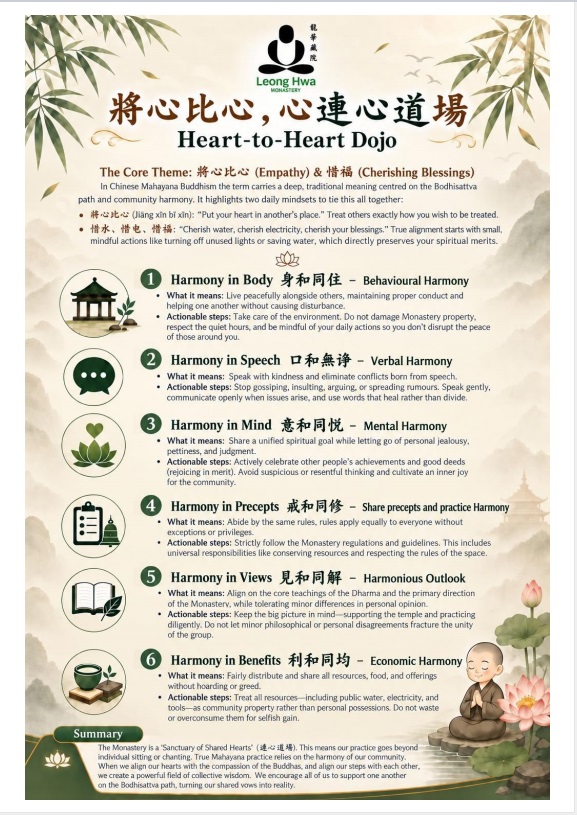
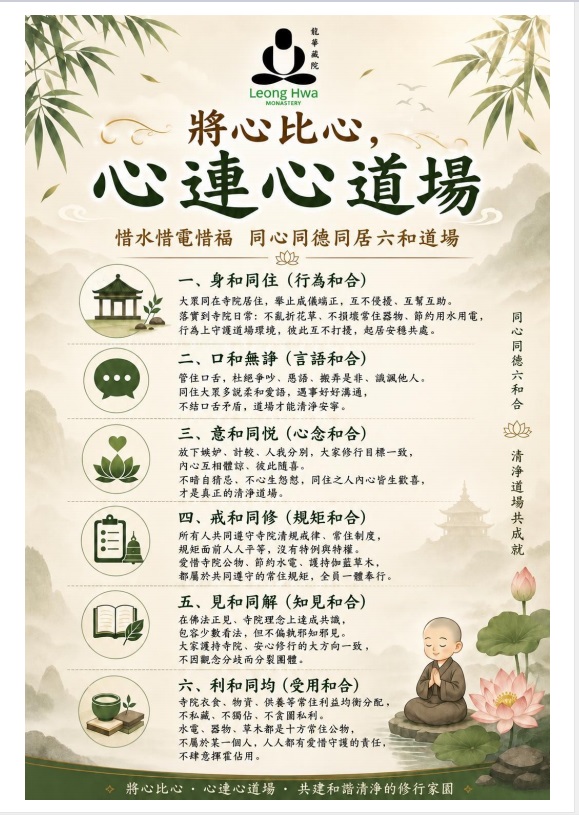
Part 1: The Core Framework — Transforming Blessings (福報) into Merit (功德)
Shifu compassionately taught that worldly blessings (福報 - Fú Bào) are limited and will eventually
be exhausted. If practitioners only perform good deeds to seek worldly comforts, they receive
temporary good karmic rewards. Once those rewards are enjoyed and spent, they remain bound to
the cycle of rebirth (Samsara).
Therefore, a practitioner must transform these exhaustible blessings into imperishable,
transcendental merit (功德 - Gōng Dé). The absolute key to this transformation is using a pure,
selfless mind—free from attachment, expectations, or desire for recognition—to practice the
methods of giving and offering outlined below.
Part 2: The Three Great Kinds of Giving (三大布施) & Karmic Transformation
Within the Buddhist path of the Six Paramitas (perfections), giving (Dāna) ranks first. It is the primary
mechanism to upgrade worldly resources into spiritual capital.
1. Material Giving (財布施 - Cái Bù Shī)
- The Giving: Donating money, physical goods, medicine, or offering physical labour to help the needy.
- Worldly Blessing: Attaining great wealth, luxury, and material abundance.
- Transformation into Merit: Giving without attachment, realizing the Three Elements of Giving are Empty (三輪體空)— meaning there is no lingering concept of "I the giver," "they the receiver," or "this object being given." This insight shatters greed and instantly upgrades material giving into boundless merit.
2. Dharma Giving (法布施 - Fǎ Bù Shī)
- The Giving: Sharing the Buddha's teachings (Dharma), moral wisdom, wholesome advice, or practical life skills. (Shifu talked about encouraging devotees to take threefold refuge and accepting the 5 precepts.)
- Worldly Blessing: Attaining great intelligence, wisdom, clarity of mind, and sharp eloquence.
- Transformation into Merit: Teaching solely to help others alleviate suffering and realize their inner nature—without chasing personal fame, profit, or respect. This awakens the light of your own intrinsic wisdom.
3. Giving of Fearlessness (無畏布施 - Wú Wèi Bù Shī)
- The Giving: Actively removing the panic, anxiety, fear, worry, and oppression felt by other humans or animals.
- Worldly Blessing: Attaining excellent health, longevity, and a life with minimal disasters or illnesses.
- Transformation into Merit: Expressing a Bodhisattva's Great Compassion (Mahākaruṇā). When you feel the pain of others and step in to protect them, this selfless empathy directly crushes the ego (我執).
Part 3: Daily Cultivation of Fearlessness & The Three Fields Daily Practices of the "Giving of Fearlessness"
Shifu emphasized that the Giving of Fearlessness is cultivated through our everyday choices, speech, and intentions:
- Refraining from Killing & Practicing Vegetarianism (戒杀如素): Committing to a vegetarian diet. This spares countless animals from the terrifying panic of slaughter.
- Releasing & Protecting Life (放生護生): Rescuing animals facing death or distress and actively caring for or sheltering stray animals.
- Comforting with Kind Words (悲憫慰藉): Standing by family, friends, or strangers facing tragedy. Listening and using warm speech to dispel their loneliness and terror.
- Providing Aid in Crises (危難相助): Stepping up to offer shelter, guidance, or medical assistance when someone is caught in a disaster or sudden danger.
Serving the "Three Fields of Blessings" (三福田)
Buddhism teaches that planting seeds in fertile soil yields a massive harvest. Serving these three groups multiplies your blessings exponentially:
- Enkindling Field (敬田 - The Triple Gem): Making offerings to the Buddha, Dharma, and Sangha out of deep reverence, accumulating "reverence wealth" (敬財). (Shifu gave examples on caring for the Monastery’s property, keep it clean and conducive for all.)
- Gratitude Field (恩田 - Parents and Teachers): Caring for your parents and showing gratitude to mentors. Gratitude is the very origin of compassion.
- Compassion Field (悲田 - The Poor and Sick): Helping the destitute, the suffering, and animals, seeking only to relieve pain without expecting anything in return.
Part 4: The Deep Core — The Mind-Ground Field of Blessings (心地福田) All external fields are ultimately reflections of your inner world. Sutra Scroll 2 of the Avatamsaka Repentance Sutra (華嚴寶懺經) explains how a kind heart (心地善良) elevates Fú-bào into Gōngdé. It instructs the practitioner to stop looking at karma as a heavy, permanent "debt" outside of themselves, and instead look at the mind that created it. Repentance is not a legal brief to get out of trouble; it demands a shift into deep, raw sincerity. The core of Scroll 2 relies on the practical physics of Samantabhadra's (普賢菩薩) Vows. It structurally trains the mind to execute Homage, Praise, and Vast Offerings as limitless mental states rather than physical rituals. The highest offering is the Dharma Offering—purifying your own mind-ground so you can treat every sentient being with kindness.
Part 5: The Seven Types of Dharma Offerings 廣修法供養
By shifting from transforming blessings (福报) into merits (功德) to Scroll 2 of the Avatamsaka Repentance Sutra, Shifu is moving from external, worldly practices to internal, ultimate purification. In the sutra, the Buddha uses methods of making offerings and gives us seven examples.
Type 1: Practicing in Accordance with the Teachings (如說修行供養)
This means relying on and practicing the Teachings
- Action Over Memorisation: Memorising scriptures or reading a sutra thousands of times is merely preparation. True practice only begins when you deeply comprehend the principles and explicitly integrate them into your daily life to truly benefit from it.
- The True Offering: Rituals, incense, and grand displays have no appeals for Buddha or enlightened beings, nor our parents or ancestors. The only offering that fills them and honours our ancestors with genuine joy is seeing a disciple actively transform their conduct to match the Teachings. There is this common saying in Buddhism: “When a child achieves Buddhahood, nine generations of ancestors ascend to heaven.”
- The Starting Point: True devotion is not found in abstract ritual but in your real daily choices. Transforming your mind and correcting your faults is the highest possible respect you can pay to the Dharma. Practice sincerely and whether other people do it or not has nothing to do with you; practice lies within oneself. You must achieve it yourself.
Type 2: Benefiting All Living Beings (利益眾生供養)
In every single thought, thought or action which we generate, we must be clear in our minds if it brings true benefit to the general society or living beings. If it is, carry out with sincerity otherwise, do not do it.
- Altruism as Practice: Spiritual advancement cannot happen in isolation. True cultivation requires looking beyond personal salvation and actively seeking ways to benefit, comfort, and uplift society, ensuring that every thought, word, and action actively contributes to the welfare of society and all sentient beings.
- The Root of Blessings: Elevating the lives of others is the direct mechanism by which we dilute our own ego and generate boundless karmic merits.
Type 3: Gathering Living Beings with Compassion (攝受眾生供養)
True spiritual influence cannot be forced or preached; it is a natural magnet. To guide others, you must first transform your own character. When your actions radiate peace, wisdom, and humility, people will naturally admire you and ask to learn from you.
- Empathetic Connection: Meeting people exactly where they are with kindness, patience, and non-judgment.
- Harmonious Influence: Using compassionate speech and gentle guidance to create a safe, welcoming environment that naturally inspires others to explore the Dharma.
- Practical Implementation in Daily Life
- Practice Service as an Offering: View serving your family and caring for their daily needs as a direct offering to the Buddha. Using your energy and physical labour (Internal Wealth) is far more valuable than simply giving money.
- Apologise and Show Praise: Shift the energy of your household by actively apologising for your own shortcomings. Choose to completely ignore your family members' past faults and consistently praise their good qualities instead.
- Drop Spiritual Arrogance: Avoid judging or looking down on family members who do not practice. Belittling others or acting spiritually superior only creates conflict and drives them further away from the Dharma.
- Optimise Your Environment: Create a peaceful atmosphere at home by working diligently, studying seriously, and using your wisdom to resolve domestic issues.
- Extend Compassion Downward: Treat even household pests (like mosquitoes or cockroaches) as sentient beings. Instead of reacting with anger, maintain a mind of compassion and mentally wish for their liberation from suffering.
Type 4: Voluntary Hardship & The Law of Mind (代眾生苦供養)
Life experiences and retributions of all living beings are entirely created and borne by themselves. No one can truly replace another. The essence of Taking on Suffering for Living Beings lies in Voluntary Hardship—choosing restraint over luxury to shift your reality and free up resources for the world.
- The Example of Sakyamuni Buddha: Born into absolute luxury, the Buddha voluntarily walked away from comfort to embrace a minimal lifestyle, proving that worldly status is empty and modelling the blueprint for escaping suffering. He preached the sutras and taught the Dharma for 49 years and led an austere life. His willingness to endure hardship is solely intended to awaken all sentient beings. Sentient beings are deeply deluded, failing to understand ultimate truth of reality. They fight for fame and chase after personal gain, creating boundless and infinite negative karma, and in the end, falling into the agonising retributions of the Three Evil Realms.
- The Law of Mind (Mind creates Reality): The law of cause and effect: whatever cause you plant, you will inevitably reap the exact karmic result. Hoarding wealth out of fear for "future sickness or disaster" subconsciously attracts those exact crises into your life. True security comes from releasing attachment, not building walls of wealth. If you have the strength or financial means, we can relieve the sufferings of living beings by doing everything within your power to carry it out. (Shifu gave example of the $20k and $30k dialysis machines.)
- Reflecting on Your Lifestyle: Actively look at your current comfort level, intentionally lower your standard of living by just one level, and redirect that exact financial surplus to immediately aid someone in distress today. (Shifu shared his simple lifestyle, his clothing and meals.)
- Hearing and practicing Buddhadharma: The single greatest suffering is the inability to hear Buddhadharma. They remain deluded, not awakened. Therefore, the giving of Dharma is the most supreme and incomparable form of assuming suffering on behalf of all living beings. (Shifu spoke on encouraging friends to attend Dharma talks and attending group practice at the Monastery.)
Type 5: De-rooting the Mind's Hidden Viruses/ Cultivation Roots of Goodness (勤修善根供養)
The roots of goodness for worldly dharmas consist of three things: non-greed (無貪),non-anger (無瞋) and non-delusion (無癡) .
- The Ultimate Spiritual Viruses: Physical illnesses only threaten one biological life. The true deadly viruses are the Three Poisons—Greed, Anger, and Ignorance—because they pull our consciousness into lower states of existence. Greed brings karmic retribution of falling into the hungry ghost realm, anger brings the retribution of falling into the Hells while delusion brings the retribution of falling in the animal realm.
- The Goal is to Subdue: Completely erasing deep habits overnight is incredibly difficult; the immediate goal is to press them down using mindful Buddha recitation as your anchor, so they lose power over your reactions.
- Continuous Daily Mindfulness: Bring your practice directly into your routine by keeping your mind pure, equal, and sharp so that you do not fall into delusion. (Shifu advised everyone to practice diligently in this life rather than relying on support chanting, which should only be viewed as a bonus.)
- Buddhism Simplified for Daily Life: It redefines the three core pillars of practice as immediate mental checkpoints for your daily life:
- Precepts = Purity ( 清淨心): Keeping your intentions clean and untainted to stop greed.
- Concentration = Equality (平等心): Maintaining a balanced, non-judgmental view of everyone to dissolve anger.
- Wisdom = Awakening (覺): Staying sharp, conscious, and present to bypass ignorance
As long as we remain mindful at every moment in our daily lives, keeping our minds pure, impartial, and fully aware without falling into delusion, we are practicing the offering of cultivating the roots of goodness. Therefore, for a practitioner who recites the Buddha's name, every single thought must correspond with purity, impartiality, and awareness.
Type 6: Your Profession is Your Practice, Bodhisattva Career (不捨菩薩業供養)
Regardless of your profession or the industry, if you remain fully aware and free of delusion, this is the Bodhisattva career.
- Shift Your Intent, Not Your Job: You do not need to quit your career or move to a monastery to practice. The only difference between an ordinary job and a Bodhisattva career is shifting your internal goal from personal profit to social or community service.
- The Business Bodhisattva: Running a business strictly to accumulate personal wealth creates ordinary karma. Running that exact same business with the primary intent of bringing convenience, fair value, and genuine service to your community turns it into a sacred Bodhisattva career. (Shifu gave an example of the shop owner going the extra mile of helping to deliver the sack of rice for an elderly person.)
- The Everyday Bodhisattva: A student mastering their coursework to eventually build or heal society is a Bodhisattva. A homemaker organizing a peaceful, joyful home that sets an uplifting example for the neighbourhood is a Bodhisattva.
Type 7: The Freedom of Absolute Sincerity/ Bodhi Mind (不離菩提心供養)
Within the seven types of offerings, the first and the last are the absolute most important; one serves as the opening and the other ultimate conclusion.
- The Bodhi-Mind = Sincerity: True spiritual awakening is not a mystical trance; it is defined as Absolute Sincerity (真誠心). It means treating every single person, task, and object with transparent honesty, completely free from deceit or self-delusion.
- The Exhaustion of Privacy: Guarding deep secrets, hiding wealth, and maintaining heavy walls of privacy creates an exhausting mental burden. Living with zero secrets and practicing transparent honesty allows your mind to live in complete comfort and ease.
- Sharing the Joy: True compassion means happily redirecting your personal resources and spiritual merits to the world. Seeing others thrive becomes your own genuine fortune and happiness.
Part 6: The Path of Merit for Everyone — Seven Ways of Giving Without Wealth (無財七施)
Derived from The Sutra of Miscellaneous Treasures (雜寶藏經)
Shifu proved that anyone can continuously generate pure merit daily through seven entirely free actions:
- Giving through the Eyes (眼施): Looking at all living beings with a compassionate, gentle, and warm gaze; strictly avoiding anger, judgment, or contempt.
- Giving through a Pleasant Expression (和顏悅色施): Greeting everyone with a warm, joyful smile and a serene expression to dissolve hostility.
- Giving through Speech (言辭施): Speaking softly and praisefully; completely refraining from harsh language, gossip, or manipulative talk.
- Giving through the Body (身施): Using respectful, humble body language and physical strength to help those in need (e.g., assisting the elderly, supporting spiritual communities).
- Giving through the Heart (心施): Treating others with an open mind, deep sincerity, tolerance, and gratitude, while uprooting inner jealousy and bitterness.
- Giving up One's Seat (床座施): Willingly yielding your seat or space to the elderly, the sick, pregnant women, or anyone who needs it more.
- Giving Shelter (房舍施): Providing physical space for others to rest or cultivate their minds. On a deeper level, expanding your heart to accommodate and tolerate the flaws of the world.
Part 7: Conclusion
Shifu’s teaching serves as a vital spiritual reminder: Worldly blessings (福報) are like water stored in a bucket—every scoop you take leaves less for the future. True merit (功德), however, is like tapping into an inexhaustible, underground freshwater spring.
True spiritual cultivation is entirely seamless with everyday life. Shifu dismantles the misconception that practicing Buddhism requires escaping into quiet monasteries or relying on complex, expensive rituals that merely accumulate superficial blessings. Instead, he teaches that the grandest offering you can make to the cosmos is the mastery, repentance, and transformation of your own mind. Realising true merit means stepping away from fear-based hoarding, choosing a life of intentional simplicity, converting your standard job into a vehicle for social and community service, and anchoring every interaction in absolute, transparent sincerity.
The true value of giving does not lie in the dollar amount, but entirely in the purity of your intent. By actively repenting our subtle faults and aligning our daily lives with active mindfulness— maintaining purity, equality, and awakening alongside mindful Buddha recitation—we firmly subdue our inner poisons. The moment you look at the world with compassionate eyes, speak words that heal, and act to remove the fears of others without wanting anything in return, you are purifying your own mind-ground and walking the path of perfect merit.
Closing Quote:
In Buddhist scriptures, Avalokiteshvara Bodhisattva (Guanyin), who 'hears the cries and relieves suffering,' stands as the ultimate exemplar of the 'Giver of Fearlessness.'
轉福報為功德:依法供養與大行懺悔契入真功德
第一部分:核心架構 —— 轉福報(Fú Bào)為功德(Gōng Dé)
師父慈悲開示,世間的福報是有限的,終有耗盡的一天。如果修行者行善只是為了追求世間的舒適安樂,那只能得到暫時的善業果報。一旦這些果報被享受、消耗殆盡,他們依然會被束縛在生死輪迴之中。 因此,修行者必須將這些會耗盡的福報,轉化為不生不滅的超然功德。這種轉化的絕對關鍵,在於以清淨、無私的心——毫無執著、毫無期待、亦不求回報與認可——去實踐以下開示的布施與供養法門。
第二部分:三大布施(三大布施)與業力轉化
在佛教修行的「六度波羅蜜」中,布施位居第一。它是將世間資源升級為精神資糧的首要機制。
- 財布施(Cái Bù Shī)
- 布施行為: 捐贈金錢、物質、醫藥,或付出體力勞動來幫助需要的人。
- 世間福報: 獲得巨大的財富、奢華的生活和物質的豐足。
- 轉化為功德: 布施而無所執著,體悟到三輪體空——也就是心中毫無**「我這個施者」、「對方這個受者」或「所布施的這件物品」**的滯留概念。這種智慧能破除貪念,瞬間將財布施升級為無量功德。
- 法布施(Fǎ Bù Shī)
- 布施行為: 分享佛法、道德智慧、善意的忠告或實用的生活技能。(師父談到了鼓勵信徒皈依三寶並受持五戒。)
- 世間福報: 獲得大智慧、聰明才智、清晰的思維和凌厲的口才。
- 轉化為功德: 教化大眾純粹是為了幫助他人遠離痛苦、明心見性,而不追逐個人的名利或尊重。這能喚醒自身自性本具的智慧之光。
- 無畏布施(Wú Wèi Bù Shī)
- 布施行為: 主動消除其他人或動物所感受到的驚恐、焦慮、害怕、憂慮和壓迫。
- 世間福報: 獲得長壽、絕佳的健康,以及一生極少遭遇災難或疾病。
- 轉化為功德: 展現菩薩的大慈大悲心。當你對他人的痛苦感同身受並挺身保護他們時,這種無私的同理心能直接粉碎我執。
第三部分:日常修持無畏施與三福田
日常修持「無畏布施」的方法
師父強調,無畏布施是透過我們日常的選擇、言行和起心動念來修持的:
- 戒杀如素: 恪守素食。這能讓無數動物免於遭受宰殺時的恐怖驚慌。
- 放生護生: 解救面臨死亡或困境的動物,並主動關懷或庇護流浪動物。
- 悲憫慰藉: 陪伴面臨悲劇的家人、朋友或陌生人。傾聽並用溫暖的言語來驅散他們的孤獨與恐懼。
- 危難相助: 當有人陷入災難或突發危險時,挺身而出提供庇護、指引或醫療協助。
侍奉「三福田」(三福田)
佛教指出,在肥沃的土地上播種能帶來巨大的收穫。侍奉這三種福田能讓你的福報呈指數級增長:
- 敬田(尊崇三寶): 帶著深切的恭敬心供養佛、法、僧三寶,累積「敬財」。(師父舉例:愛護道場的公物,保持環境整潔,以此利於大眾修行。)
- 恩田(父母與師長): 孝順父母,感念恩師。感恩正是慈悲心的源頭。
- 悲田(貧困與疾病者): 幫助困苦的人、受難的人以及動物,純粹為了緩解痛苦,不求任何回報。
第四部分:深層核心 —— 心地福田
一切外在的福田,終究是內心世界的投射。《華嚴寶懺經》卷二詳細闡述了善良的心地如何將福報提升為功德。它引導修行者不再將業力視為自身之外沉重而永恆的「債務」,而是去審視創造業力的那顆心。 懺悔不是用來脫罪的法律訴狀,它需要轉變為深層、赤裸的真誠。卷二的核心依賴於普賢菩薩大願的實踐物理學。它在結構上訓練內心去執行禮敬、讚嘆和廣大供養,將其作為無邊的內心狀態,而非僅僅是物質儀軌。而最高層次的供養即是法供養——淨化自己的心地,從而能以慈悲對待每一位眾生。
第五部分:七種法供養(廣修法供養)
透過將轉福報為功德引申至《華嚴寶懺經》卷二,師父正在將修行從外在的世間作法提升到內在的終極淨化。在經典中,佛陀運用修供養的方法,為我們示現了七個範例。
第一種:如說修行供養
這意味著要依教奉行,依憑教法來修持。
- 行重於誦: 默記經文或將一部經讀誦千百遍僅僅是準備工作。只有當你深刻領悟其中的道理,並明確地將它們融入日常生活中切實獲益時,真正的修行才算開始。
- 真正的供養: 儀式、香火和宏大的場面對佛菩薩、父母或祖先而言並無吸引力。唯一能讓他們欣慰、令祖先感到真正歡喜的供養,是看到弟子主動改變自己的行為以契合教法。佛教常說:「一子成佛,九祖升天。」
- 出發點: 真正的虔誠不在於抽象的儀式,而在於你現實中每天的選擇。轉變心念、改正過錯,是你對佛法所能表達的最高敬意。真誠修持,他人做與不做與你毫無關係;修行完全在於自身,你必須自己去成就。
第二種:利益眾生供養
在我們生起的每一個念頭或行為中,我們必須在心中明確這是否能為整個社會或眾生帶來真正的利益。如果是,便要真誠地去實行;否則,絕不要做。
- 以利他為修行: 靈性的提升不可能孤立發生。真正的修持需要超越個人的解脫,主動尋求利益、安慰和提升社會的方法,確保一言一行、起心動念都在積極為社會和一切眾生的福祉做貢獻。
- 福報的根源: 提升他人的生活,是我們淡化自我、產生無量業力功德的直接機制。
第三種:攝受眾生供養
真正的靈性影響力是無法強求或說教的,它是一種天然的磁場。要引導他人,你必須先轉化自己的品格。當你的行為散發出和平、智慧與謙遜時,人們自然會欽佩並渴望向你學習。
- 同理心連結: 以慈悲、耐心和不評判的心態,與人們在其當下的狀態中和光同塵。
- 和諧的感化: 運用慈悲的言語和柔和的引導,創造一個安全、溫馨的環境,自然而然地啟發他人來探索佛法。
日常生活中的具體落實
- 將服務奉獻視為供養: 將操持家務、照顧家人的日常需求視為對佛陀的直接供養。奉獻你的精力與體力(內財)遠比單純捐錢更具價值。
- 主動道歉與給予讚美: 透過主動為自己的缺點道歉來轉變家庭的能量。選擇完全忽略家人過去的過錯,轉而一貫讚嘆他們的優點。
- 放下傲慢: 避免評判或輕視那些不修行的家人。貶低他人或表現得高人一等只會製造衝突,使他們離佛法更遠。
- 優化你的環境: 透過勤奮工作、認真學習並運用智慧化解家庭糾紛,在 mime 中營造和平的氣氛。
- 向下延伸慈悲: 對待家中的害蟲(如蚊子或蟑螂)也要視同眾生。切勿心生瞋恨,而要保持慈悲心,在心中祝願它們早日離苦得樂。
第四種:代眾生苦供養(代眾生苦供養)
一切眾生的生命經歷與果報,完全是由他們自己創造並承受的。沒有人能真正取代另一個人。「代眾生苦」的本質在於自願吃苦——選擇克制而非奢華,從而轉變你的現實,並為世界騰出資源。
- 釋迦牟尼佛的示現: 佛陀出身於極致的奢華之中,但他毅然捨棄了舒適,選擇走向極簡的生活方式,證明了世間地位的虛妄,並為擺脫痛苦塑造了藍圖。他講經說法 49年,過著簡樸的生活,他甘願忍受艱辛,純粹是為了喚醒一切迷茫的眾生。
- 眾生深受迷惑,無法明白現實的終極真相。他們爭名奪利,造下無量無邊的惡業,最終墮入三惡道的痛苦果報之中。
- 心法(心造現實): 因果規律:種下什麼因,就必然收穫什麼業果。因害怕「未來生病或災難」而囤積財富,潛意識裡反而會把這些危機吸引到你的生活中。真正的安全感來自放下執著,而非築起財富的高牆。如果你有能力或經濟條件,應盡己所能去緩解眾生的痛苦。(師父舉了兩、三萬美金洗腎機的例子。)
- 反思你的生活方式: 主動審視你目前的舒適度,刻意將生活水平降低一個檔次,並將省下來的資金挪出,在今天立刻去幫助陷入困境的人。(師父分享了他個人的簡樸生活、他的衣著和飲食。)
- 聽聞與修持佛法: 最大的痛苦莫過於無法聽聞佛法。眾生保持迷茫,未能覺悟。因此,法布施是代一切眾生承受痛苦最殊勝、最無與倫比的形式。(師父談到了鼓勵朋友參加佛學講座以及到寺院參加共修。)
第五種:根除心中的隱形病毒 / 勤修善根供養
世間法的善根包含三件事:無貪、無瞋和無癡。
- 終極的靈性病毒: 肉體的疾病只能威脅這一次的生理生命。而真正的致命病毒是「三毒」——貪、瞋、癡,因為它們會將我們的神識拉入低等的存在狀態。貪心帶來墮入餓鬼道的業報,瞋恨帶來墮入地獄的業報,而愚癡則帶來墮入畜生道的業報。
- 目標在於伏住: 要在一夜之間完全抹去根深蒂固的習氣極其困難;眼前的目標是以清淨念佛為錨來壓制它們,使其失去主導你反應的力量。
- 日常的不斷觀照: 將修行直接帶入日常,保持內心的純淨、平等與敏銳,如此才不會落入愚癡。(師父開示大眾這一生要精進修行,不要依賴助念,應將其視為額外的助緣。)
- 佛法融入生活的簡化: 它將修行的三大核心支柱重新定義為日常生活中即時的內心檢查點:
- 戒 = 清淨心: 保持意念乾淨、不染塵埃,以此止住貪。
- 定 = 平等心: 對每個人保持平衡、不評判的態度,以此化解瞋。
- 慧 = 覺: 保持敏銳、清醒與當下現前,以此繞過癡。
只要我們在日常生活的每一個當下保持正念,讓自心保持清淨、平等與全然覺知而不落入迷惑,我們就是在修持勤修善根的供養。因此,對於一個念佛人來說,起心動念都必須與清淨、平等、覺相應。
第六種:你的職業就是你的修行(不捨菩薩業供養)
無論你的職業是什麼、身處哪一個行業,只要你保持全然覺知、遠離迷惑,這就是菩薩事業。
- 轉變心態,而非更換工作: 你不需要辭去工作或搬進寺院去修行。普通工作與菩薩事業之間的唯一區別,在於將內在目標從個人私利轉變為社會或大眾服務。
- 商界菩薩: 純粹為了累積個人財富而經營生意,創造的是普通業力。而以同樣的生意,將首要動機轉變為給社區帶來便利、公道價值和真誠服務,便將其轉化為了神聖的菩薩事業。(師父舉了一個店主特地多走一里路,幫一位長者送一袋大米的例子。)
- 日常菩薩: 一位為了將來能建設或療癒社會而精進學業學生,就是菩薩。一位將家裡打理得和平、法喜,為鄰里樹立提升榜樣的家庭主婦,也是菩薩。
第七種:絕對真誠的自由 / 菩提心(不離菩提心供養)
在七種供養當中,第一種和最後一種最為重要;一個作為開端,另一個作為終極圓滿的總結。
- 菩提心 = 真誠: 真正的靈性覺醒並非一種神秘的恍惚狀態;它被定義為真誠心。這意味著要以透明的坦率對待每一個人、每一件事和每一件物品,完全遠離欺瞞或自欺。
- 隱私的釋放: 守著深層的秘密、隱藏財富以及築起沉重的隱私高牆,會造成令人精疲力竭的精神負擔。過著毫無秘密的生活並實踐透明的坦率,能讓你的心靈處在完全的舒適與安逸之中。
- 同享法喜: 真正的慈悲意味著樂意將個人的資源和精神功德迴向給世界。看到他人興旺,便成了你自身真正的福報與快樂。
第六部分: 人人可行的功德之道—無財七施
源自《雜寶藏經》
師父證明了,任何人都可以透過七種完全免費的行動,在日常中源源不斷地產生純淨的功德:
- 眼施: 以慈悲、柔和、溫暖的目光注視一切眾生;嚴格戒除憤怒、評判或蔑視。
- 和顏悅色施: 以溫暖、喜悅的笑容和安詳的面容迎接每一個人,以此化解敵意。
- 言辭施: 說話柔和、多加讚嘆;完全戒除粗口、八卦或操弄人心的言論。
- 身施: 運用恭敬、謙卑的肢體語言和體力去幫助有需要的人(例如扶助長者、護持修行團體)。
- 心施: 以開放的心胸、深切的真誠、包容與感恩對待他人,同時根除內心的嫉妒與苦毒。
- 床座施: 主動將你的座位或空間讓給長者、病人、孕婦或任何比你更需要它的人。
- 房舍施: 為他人提供休息或修心的物理空間。在更深層次上,則是擴大你的心量,去容納和包容這個世界的瑕疵。
第七部分:結語
師父的教導可謂是一記至關重要的靈性當頭棒喝:世間的福報就像桶裡存的水——你每舀一勺,留給未來的就少了一勺。然而,真正的功德則像接通了一股取之不盡、用之不竭的地下清泉。
真正的靈性修持與日常生活是完全無縫銜接的。師父打破了「修學佛法必須逃避到清靜的寺院,或依賴昂貴複雜、僅能累積表面福報的儀軌」這一誤解。相反,他教導我們,你能對宇宙做出的最宏大供養,莫過於對自心的掌控、懺悔與轉化。體悟真正的功德,意味著遠離基於恐懼的囤積,選擇一種有意為之的簡樸生活,將你的普通工作轉化為服務社會與大眾的載體,並將每一次互動都錨定在絕對、透明的真誠之中。
布施的真正價值不在於金錢的數額,而完全在於你內心意念的清淨。透過主動懺悔我們微細的過錯,並將日常與積極的正念緊密結合——在清淨念佛的同時保持清淨、平等、覺——我們便能有力地伏住內心的毒素。當你用慈悲的雙眼看待世界、用療癒的言語說話,並在不求回報的情況下出面消除他人的恐懼時,你便是在淨化自己的心地,並正行走在圓滿功德的康莊大道上。
結語引言:
佛教經典中,「聞聲救苦」的觀世音菩薩,便是「施無畏者」的最佳典範。
Upon meeting a monk or nun in the temple, please join your palms and greet them with: "Dharma Master, Amitabha Buddha!" When departing, say "Amitabha Buddha" rather than a "Goodbye." Please keep this respectful practice in mind!
The monastery is a pure and sagely Way-Place. As such, smoking is completely unsuited to this sacred environment. Neither should we walk about inside wearing slippers, leather shoes, or clogs, nor should we consume food while walking and scatter the remains. Such actions directly violate the pure regulations of the monastery.
The Buddhas and Bodhisattvas is of utmost importance in the life of all Buddhists. Upon entering a Buddha Hall, Buddhists or visitors must pay respect by means of paying homage, greet, making obeisance and bowing to the Buddhas and Bodhisattvas!
A lay disciple is not supposed to stand in the middle of the hall, browsing around, while making obeisance to the Buddhas. It is considered rude to treat the images of the Buddhas and Bodhisattvas with the intention to scrutinize them as art pieces.
A Buddha Hall is a Holy Place where people must restrain themselves from chitchatting or make noise. Unruly people who insist on talking loudly, loitering and worst of all, lying around as they like, are behaviors that go against the monasteries' rules.
Some children treat the Buddha Hall as a playground by running around and touching everything within their reach. Consequently, parents are fully responsible for instructing their children on proper conduct.
Parents who understand the benefits of practicing the Buddha Dharma should encourage their children and youth to learn Buddhism. By encouraging them to participate in Dharma Assemblies and listen to Dharma talks, parents can guide them to learn from the Buddha Dharma, helping them become filial children and upstanding citizens.
As a pure dwelling, the monastery is protected and upheld by the deities of the Eight Groups of Dharma Protectors. Anyone who spits carelessly promotes the spread of disease through unhygienic habits. Such offenders harm the sacred Sangha Gem, carrying heavy karmic consequences that will lead to falling into the hell realm and undergoing the retributions of acute suffering.
It is against the rules of monastery if followers or visitors, place their umbrellas, raincoats, hats, handbags, purses and other personal items on the offering table. They must place them at designated location that is suitable to place their personal belongings.
Layman who wishes to make obeisance to the Buddha must do so by standing on the right or left hand side of the hall. The middle of the hall is a designated honorable position which is assigned for the Abbot of the Monastery.
The adorned Buddha Hall is a holy place to be respected; therefore, lay disciples are expected to dress appropriately. It is not advisable to wear miniskirts, shorts, or low-cut and bare-back blouses, as such attire shows a lack of respect for the solemnity of the Buddha Hall.
We must understand that making obeisance is the highest form of respect we can show to the Buddhas. Therefore, we should wash our hands and cleanse ourselves before bowing to them, never acting carelessly. Indeed, if one sincerely bows to the Buddha just once, offenses as numerous as the sands of the Ganges will be eradicated.
We should avoid consuming meat before reciting sutras or bowing to the Buddha. In addition, chewing gum while praying to the Buddhas is considered deeply disrespectful.
For one to display a solemn appearance with great respect while making obeisance to the Buddha, a person has to stand upright, eyes and mind focus and place his palms together firmly.
For those who are new to the Monastery and do not know the correct way in making obeisance to The Buddha, they should consult the Dharma Masters or those who stand beside them. It is not advisable to conduct in a superficial or insincere manner.
Do not walk in front of individuals bowing to the Buddha, as it distracts them from their practice. This behavior is also looked upon as inconsiderate and disrespectful.
We should wash our hands before handling a sutra. It must be held respectfully with both hands, as if the Buddha were standing right before us. The preferred posture for recitation is kneeling, but it is also acceptable to either stand or sit.
The Buddha sutras are the Dharma Gem, which is protected and upheld by the deities of the Eight Groups of Dharma Protectors. We should never place them on the floor, leave them dangling off the edge of a surface, or lay them with their front covers facing downward. Doing so violates proper conduct and is a serious sign of disrespect.
At the monastery, we must never walk in front of the Sutra Recitation Assembly or take photographs in complete disregard of the ongoing service. Doing so disrupts the harmonious atmosphere of the adorned temple and constitutes disorderly conduct.
Remember, when carrying a Buddha image with both hands, you should refrain from bowing to others or exchanging greetings. The image must always be held above the waist.
The altar is meant solely for placing Buddha images and ritual offerings. Personal belongings must not be placed on this table, as doing so constitutes a disrespectful offense against the Triple Gems!
While at the monastery, we must never take anything without permission. We must not take food from the kitchen or fruits from the altar to consume. Doing so constitutes the offense of stealing—specifically, stealing offerings meant for the Permanent Dwelling that have been contributed from the ten directions!
We should not act out of greed, nor should we use the monastery's amenities for our own convenience or comfort. If we need to use the telephone, we must pay accordingly or make a donation in the Blessing Box. Otherwise, even a small act of misuse can bring about great retribution. We must always be careful not to commit grave offenses through minor negligence!
Buddhists and visitors who receive a blessed gift from the Abbot or other Dharma Masters are encouraged to place a donation in the Merit Box. This gesture is a meaningful expression of mutual respect.
To create good affinity with all beings, vegetarian banquets are organized during Vesak Day celebrations and other Dharma Assemblies. After enjoying the meal, we should make a donation to the Merit Box, as this food is provided by the generosity of the multitude from the ten directions. We should never take these offerings for granted or consume them without giving back.
When receiving meals at the monastery, please line up orderly rather than rushing for food. It is our responsibility to strictly observe the pure rules without violation.
When speaking to a Dharma Master who is seated, we should stand respectfully beside them, and we must not sit down unless invited to do so. While standing, we should maintain an upright posture without leaning against walls or slouching, as improper posture is a sign of great disrespect.
When speaking to a Dharma Master, we should converse clearly, gently, and with a joyful heart, always maintaining a respectful manner. Furthermore, we must be careful never to interrupt the Dharma Master while they are speaking.
When the Dharma Master is giving a Dharma talk or instructions, we must not chat with those sitting beside us or fall asleep. This is considered disrespectful.
We must never use items belonging to a Dharma Master, such as their chairs, bed, utensils, or clothing. If we are ever unsure, we must always ask for permission before touching or using anything. This is a matter of basic courtesy and respect.
We must always use both hands when making offerings to the Dharma Masters. Never offer food that we have already tasted or eaten, as presenting left-over or tasted food is considered an offense of giving impure offerings.
Prior to entering the room of a Dharma Master, please knock on the door three times. If no response is given, recognize that the master may be working or resting, and depart immediately. Under no circumstances should you force entry into the room.
Please refrain from making formal obeisance to a Dharma Master while they are engaged in daily activities such as eating, resting, sleeping, writing, talking on the phone, or attending to personal hygiene. When crossing paths outdoors, formal obeisance is unnecessary—a respectful greeting is sufficient.
When making obeisance to a Dharma Master, we should do so by facing the direction of the Buddhas and Bodhisattvas, rather than bowing directly to the master's physical body. Bowing directly to the person is not in accordance with proper etiquette.
If a Dharma Master presents you with a gift to create wholesome affinity, always accept it with both hands. You can express your thanks by reciting "Amitabha Buddha." Never receive a gift with a single hand, as this is considered highly disrespectful.
When staying at a monastery, we must strictly abide by its regulations. For instance, lights must be switched off at the designated curfew. We must not turn them back on at our own whim to read or gossip, as this is not only wasteful but also constitutes a violation of the precept against stealing monastic resources.
Visitors leaving the monastery after a stay must not take any monastic items home. This strict rule applies even to minor objects like a needle or thread. Taking such items constitutes a direct violation of the precept against stealing.
In today's modern society, mobile phones are everywhere. For the sake of convenience, many people bring them into the temple, only to listen to the Sutra half-heartedly while managing their business affairs on their devices. Distracting oneself during a sacred teaching is a grave offense!
Please refrain from bringing personal audio devices, radios, or portable speakers into the monastery grounds. Listening to music or singing aloud disrupts the environment and disregards the presence of the Dharma Masters and fellow practitioners. Such behavior is considered a serious breach of temple etiquette.
Out of respect for the assembly, please do not attend recitation services immediately after exercising while wearing sweaty attire. Arriving at the shrine hall in inappropriate clothing disrupts the purity of the environment and creates unwholesome karma.
As a pure Way-Place, the monastery requires both long-time cultivators and newcomers to dwell together in perfect harmony. Those who understand the rules should kindly instruct the new arrivals. Never let arrogance take root by looking down on anyone—this only reveals a lack of true spiritual cultivation and fosters needless dispute. Instead of sowing seeds of blessing, one would simply be committing further offenses.
The merit and virtue of reciting Sutras are truly immeasurable, which is why we should strive to chant together in perfect harmony. We recite the Sutras so that our own ears can hear the words clearly, not to impress others with the quality of our voice. It is highly disrespectful to scream at the top of our lungs and disturb the assembly, especially if our volume drowns out the leading monastic. Therefore, we must remain deeply mindful of our behavior.
At times, disputes may arise within a monastery, but a wise person will always refrain from taking part in them. If someone approaches you to gossip about the faults or conflicts of others, you should simply listen mindfully and try to offer gentle advice. We must never fuel the fire by bringing up additional grievances, as doing so only creates more negative karma.